Can Coolers as a Wholesale Product: What Actually Drives the Category
Can coolers — the sleeve or holder that keeps a canned beverage cold while someone holds it — occupy an unusual position in the drinkware market. They’re a simple product with limited functional complexity, but they’re one of the most reliably purchased items in the promotional merchandise category and have a consistent wholesale demand that doesn’t follow the same trend cycles as more fashion-driven drinkware.
Understanding what drives that demand, and what separates a well-made can cooler from a cheap one that undermines the brand on it, is more useful than it might initially seem.
Why can coolers work as a promotional product
The category has specific properties that make it durable in the promotional merchandise channel. Can coolers have near-universal use relevance — almost anyone who drinks canned beverages has a use for one, which avoids the targeting problem that limits some promotional items. They’re compact and lightweight enough to ship cheaply, include in event bags, or stack in a display at a trade show booth. And they carry branding that stays visible throughout the entire time someone holds their drink.
The visibility duration is worth noting. A logo on a can cooler is in the user’s hand while they’re drinking, which typically means 15–30 minutes of continuous low-attention brand exposure per use. For outdoor events, sporting events, and situations where people are holding drinks for extended periods, this is meaningfully more exposure than a branded item that goes into a pocket or bag.
The category is also giftable without requiring the giver to know the recipient’s size, taste in aesthetics, or any personal preferences. That combination of broad relevance and easy gifting logic makes it a consistent choice for event organizers, corporate gifting managers, and beverage brands running promotions.
The sizing problem that buyers get wrong
The most basic specification mistake in can cooler sourcing is assuming that all canned beverages are the same size. They’re not, and the fit between the cooler and the can matters functionally.
Standard 12oz cans — the format for most domestic beer, soda, and energy drinks — have a consistent diameter of approximately 2.6 inches (66mm). A can cooler designed for this format fits snugly enough to insulate and hold without slipping. Hard seltzer and craft beer often come in 12oz slim cans, which are taller and narrower at approximately 2.1 inches (53mm) diameter. A standard 12oz can cooler won’t hold a slim can properly — the can rattles inside it, the insulation contact is poor, and the product looks poorly matched.
16oz cans — the format for many craft beers and hard seltzers — are wider than 12oz standard cans and won’t fit into a standard can cooler at all.
Before specifying a can cooler, confirm which can format the product is intended for. If it’s for a specific brewery or beverage brand, ask them which can format they use for the products that will be paired with the cooler. Getting this wrong produces a product that doesn’t fit the can it’s supposed to hold, which is a return-rate problem and a brand impression problem simultaneously.
Stainless steel vs. neoprene: what each is for
The market has two primary material categories: stainless steel and neoprene (or similar foam). They serve different use cases and different buyer profiles.
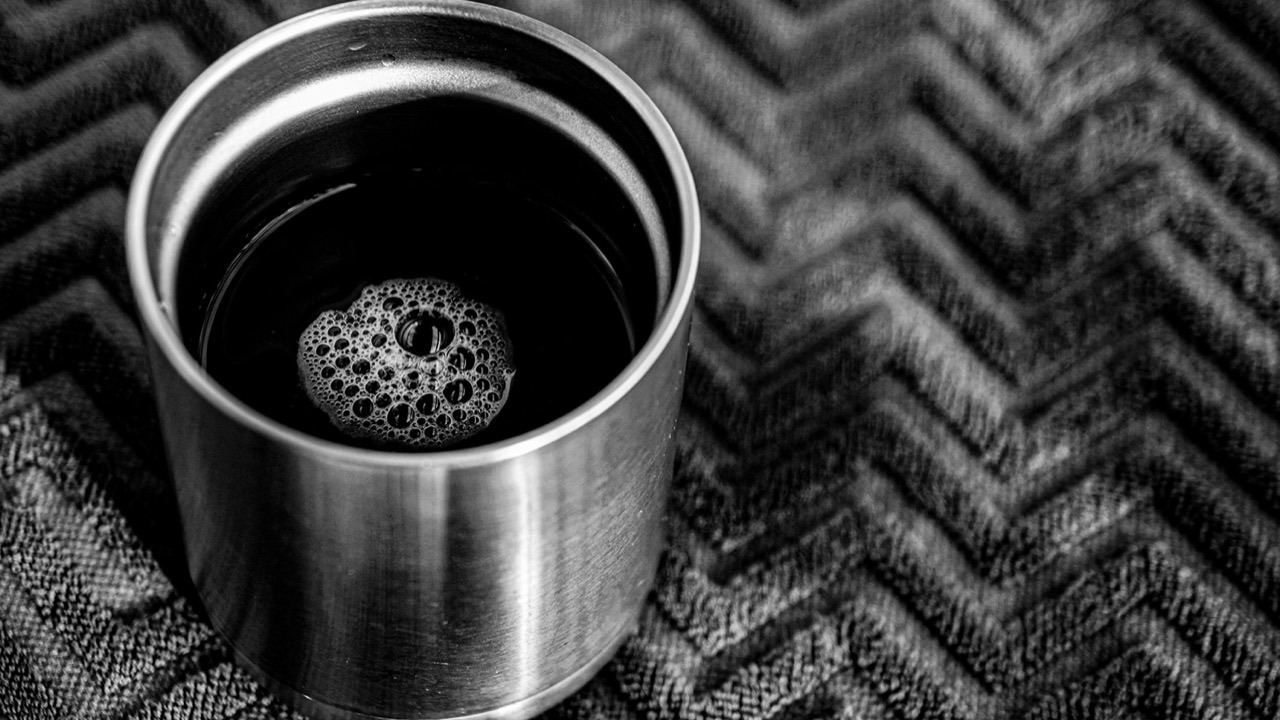
Stainless steel can coolers are insulated products — typically double-wall vacuum construction — that actively slow heat transfer between the cold can and the warm hand and environment. They keep canned beverages cold measurably longer than neoprene alternatives, they’re durable enough to be a permanent drinkware item rather than a single-event giveaway, and they look and feel like a premium product. They’re the right choice for buyers who want a can cooler that recipients will keep and use repeatedly. The unit cost is higher than neoprene, which limits their use in very high-volume event giveaway contexts.
Neoprene can coolers are the classic promotional koozie — lightweight, compressible, inexpensive, and effective at the basic task of providing a thermal and grip buffer between a cold can and a warm hand. They’re not as thermally effective as stainless steel but the performance gap is small enough for typical use. Their main advantages are low unit cost, the ability to produce large quantities cost-effectively, and easy storage and transport for event distribution. They’re the right choice when volume matters more than perceived value per unit.
Working with a can cooler manufacturer that produces both formats means buyers can evaluate which product fits their specific use case rather than being limited to one category.
The branding considerations that matter most
Can coolers are fundamentally a branding vehicle, and the branding method determines how that brand holds up over the product’s lifespan.
For stainless steel can coolers, laser engraving is the most durable branding method. The engraving removes the coating or etches the steel surface directly, creating a permanent mark that doesn’t peel, fade, or wear off with washing and regular use. For a product that a recipient might use daily for years, this is the appropriate branding standard.
Screen printing on stainless steel is less expensive but less permanent. It’s appropriate for products where longevity isn’t the primary requirement — event giveaways where the item serves a one-time or short-term purpose — but will visibly degrade on a product that’s washed repeatedly.
For neoprene, the standard is screen printing or sublimation printing. Sublimation allows full-color, photographic-quality graphics that screen printing can’t achieve and holds up better over time. For orders where detailed branding or multi-color logos are important, sublimation is worth the modest cost premium over screen printing.
What manufacturing quality looks like in this category
For stainless steel can coolers, the quality variables that predict real-world performance are the same as those for any stainless drinkware: vacuum seal quality (which determines actual insulation performance), wall thickness, coating adhesion, and lid design if a lid is included.
The vacuum seal is the critical one. A properly sealed double-wall can cooler won’t sweat on the outside — moisture doesn’t condense on a surface that stays close to room temperature. A poorly sealed unit sweats visibly, which is a clear indicator that the insulation isn’t working and the product will allow heat transfer at a rate close to an uninsulated product. Testing a production sample in warm ambient conditions before approving an order catches this failure mode early.
For neoprene, the thickness and density of the material determine both insulation performance and durability. Thin neoprene compresses easily and loses its grip on the can; dense, thick neoprene maintains its shape through years of repeated use. Request a material specification — thickness in millimeters is a concrete spec that’s easy to verify — rather than relying on generic quality claims.